Did you know the world creates over 2.5 quintillion bytes of data every day? That’s a huge number. Photos, documents, and videos all need a safe place to be stored.
This huge amount of data is changing how we store information. It’s not just about saving files anymore. Now, your unused hard drive space can become a valuable asset.
Cloud computing has changed everything. It offers a real cloud storage business opportunity for those who know how to use it. This is a smart way to make money in our digital world.
Key Takeaways
- The world’s staggering daily data creation drives an unprecedented need for digital storage.
- Cloud technology has revolutionized how we can use and monetize our digital resources.
- Your unused storage space can be transformed into a steady source of passive income.
- This represents a practical and accessible shift in building wealth for the digital age.
- You don’t need to be a tech expert to start tapping into this opportunity.
- It’s a forward-looking method to generate earnings without active, daily management.
1. Defining the Global Cloud Storage Income Opportunity
Your unused terabytes are more than empty space. They’re a chance to earn money in a global market. It’s not about investing in tech. It’s about making money from the extra space on your hard drives.

1.1. Transforming a Cost into a Revenue Stream
For years, storing data cost money. You paid monthly fees to companies like Google or Dropbox. Now, this model is changing.
Platforms like Storj and Filecoin connect people who need storage with those who have extra space. You become the provider. Instead of paying, you get paid. This is a great chance for you to make passive income from something you already do.
You can easily rent out your excess digital storage capacity and earn passive income.
1.2. The Simple Idea of Sharing Your Digital Space
The idea is simple. You install a small program on your computer. It shares a part of your unused hard drive with the world.
Your computer stores encrypted pieces of files for users and businesses everywhere. Your small part helps make a big, strong cloud. You’re not just hosting files for someone you know. You’re part of a secure, peer-to-peer data network.
1.2.1. How the Economics of Data Have Flipped
The world is making more data than ever. Videos, documents, and backups are created all the time. Traditional cloud providers are facing high costs and full storage.
This demand has opened a new market. Your unused gigabytes are valuable. Platforms help you get paid for reliable service.
Renting out unused storage capacity can be monetized through platforms like Storj and Filecoin, where users pay to store their data securely. You’re part of a shift where data storage is a traded commodity. This is the core of your global data storage earnings chance.
2. How Monetizing Your Cloud Storage Actually Works
To understand how you make money from your spare storage, imagine a global network of computers working together. This is different from a single company’s server farm. This change from a centralized to a decentralized model is what drives your cloud storage profit. The process is automated, clear, and designed to turn your unused hardware into a source of international cloud storage revenue.
2.1. The Peer-to-Peer Network Model Explained
Forget the big data centers run by tech giants. In a peer-to-peer (P2P) storage network, there’s no central authority. Instead, thousands of individuals like you contribute their unused hard drive space. Together, they form a massive, strong storage pool.

When someone needs to store a file, the network doesn’t send it to one place. It breaks the file into encrypted pieces and spreads them across many nodes in the network. This model has big benefits:
- Resilience: If one node goes offline, the data is safe and accessible from others.
- Cost-Effectiveness: By using existing hardware, the network offers storage at a lower cost than traditional providers.
- Opportunity: It creates a direct marketplace where supply (your space) meets demand (users’ files).
2.1.1. Your Exact Role as a Storage Node Operator
Your job is simple. You are a landlord for digital data. After installing the platform’s software on your computer or server, your machine becomes a “storage node” on the network.
You decide how much space to rent out and, on some platforms, you can even set your own rates. The software runs in the background, automatically handling incoming data requests and managing payments. As one platform explains, the setup is straightforward:
“All you have to do is set up your server, set your rates, and choose your clients.”
Your main tasks are to keep your node online (good uptime), maintain a stable internet connection, and ensure your hardware is reliable. The network and its smart contracts handle the rest, making your effort mostly passive after the initial setup.
2.2. From Data Upload to Your Bank Account: The Payment Flow
Let’s follow a file’s journey to see how it turns into earnings for you. This flow makes the path to cloud storage profit clear.
- A User Uploads a File: Someone using the decentralized storage service uploads a document, photo, or video.
- The Network Prepares the Data: The file is encrypted and split into dozens of smaller pieces called “shards.”
- Shards Are Distributed: These encrypted shards are sent to multiple storage nodes across the globe—potentially including yours.
- Smart Contracts Lock the Deal: A smart contract (a self-executing digital agreement) is created between the user and every node storing their data. This contract defines the storage duration, price, and payment terms.
- You Provide Continuous Storage: Your node holds onto the data shards and proves periodically that it has them intact.
- Automated, Incremental Payments: Based on the smart contract, you receive micropayments, often in cryptocurrency, for the service you provide. This happens automatically and continuously.
- Earnings Conversion and Withdrawal: The platform typically aggregates your earnings. You can then hold the cryptocurrency or convert it to traditional currency (like USD) and withdraw it to your bank account.
This entire process, from the user’s upload to your withdrawal, is what creates a stream of international cloud storage revenue. The steps are managed by the platform, making your active involvement minimal once your node is live and connected.
3. The Technology Behind Decentralized Cloud Storage
Ever wondered how you can make money and keep your data safe at the same time? It’s all thanks to the smart tech behind decentralized networks. This isn’t magic; it’s based on proven tech that keeps your data safe and secure.
Learning about this tech boosts your confidence. You’ll see why this way of earning money with cloud storage is both strong and trustworthy.

3.1. Blockchain: The Trust Layer for Transactions
Blockchain isn’t just for Bitcoin. Here, it acts as a public, unchangeable record book. It doesn’t store your files but records agreements and proofs.
The network checks if you’re really storing the data you promised. It logs these checks on the blockchain. This creates a strong system of trust between you and users. No central company is needed to mediate or verify your claims.
3.1.1. How Smart Contracts Automate Your Earnings
This is where your passive income from cloud storage gets automated. Smart contracts are like rules written in code on the blockchain.
When you agree to host data, a smart contract is created. It says, “If this node provides proof of storage for 30 days, then pay X amount.” The contract does the work automatically. You don’t have to invoice anyone or chase payments.
The system checks your work and sends your earnings to your wallet. It’s a hands-off process that runs on logic alone.
3.2. Data Sharding and Encryption for Security
Your biggest worry is probably privacy and safety. Decentralized networks tackle this with sharding and encryption.
First, sharding breaks any uploaded file into dozens of smaller pieces, called fragments. A single file is never stored whole in one place.
Second, each fragment is scrambled with military-grade encryption before it leaves the uploader’s device. This is called end-to-end encryption. Only the person who uploaded the data can reassemble and decrypt it.
3.2.1. Why Your Stored Data is Private and Safe
So, what’s on your hard drive? You’re storing encrypted fragments of many different files. They look like random digital noise. You can’t read them. Even if someone accessed your drive directly, the data would be useless.
This fragmentation makes it virtually impossible for anyone to access a complete file. The system also spreads these fragments across many nodes globally. If your computer goes offline, the network just uses the other copies stored elsewhere.
This makes the network far more resilient against attacks or hardware failures than a traditional data center. Your role is secure and private by design.
| Feature | Traditional Centralized Cloud | Decentralized Cloud Storage |
|---|---|---|
| Underlying Architecture | Large, owned data centers in specific locations. | A global peer-to-peer network of individual user hardware. |
| Data Security Model | Encryption at rest and in transit, managed by the provider. | End-to-end encryption and data sharding before distribution. The host cannot read the data. |
| Transaction & Payment Trust | Managed by the company’s internal billing systems. | Automated by blockchain smart contracts and cryptographic proofs. |
| Resilience to Failure | Dependent on redundancy within company data centers. | Inherently redundant; data fragments are stored on multiple independent nodes worldwide. |
This tech foundation turns a simple idea into a real way to earn money with cloud storage. The blockchain ensures you get paid fairly and automatically. Advanced encryption keeps your contribution safe and private. Together, they power a truly passive income stream.
4. Turning Idle Digital Space into a Goldmine
Your spare terabytes are more than just digital space. They’re a chance to make money in a booming market. This isn’t just a dream. A big change is happening in how we store data.
This change turns unused space on your hard drives into a real cloud storage business opportunity.
Think about the hard drive in your desktop or the bays in your NAS that are only half full. Until recently, that space was a sunk cost. Today, it’s an asset. Decentralized networks have created a vibrant marketplace where your unused capacity meets a massive and growing need.
4.1. The Soaring Demand for Affordable Storage
What’s driving this need? Our lives and work are becoming overwhelmingly digital. The move towards remote work and digital teamwork isn’t slowing down. Teams and businesses everywhere need a safe, reliable, and affordable place for their files.
This goes beyond office documents. Think about the explosion in content creation. A single hour of 4K video can require hundreds of gigabytes. Photographers, videographers, and even gamers are generating massive files daily.
Traditional cloud storage from big tech companies can be expensive, even at scale. Many businesses are now looking for alternatives to these costly, centralized services. They want to move from a capital expense model (buying expensive hardware) to a more flexible operational expense (OPEX) model.
This is where you come in. By sharing a slice of your storage to a decentralized network, you help meet this demand for affordable, scalable space. You become part of the solution.

4.2. Your Unused Terabytes Have Real Market Value
So, how much is your idle space actually worth? The value comes from a simple economic principle: supply and demand. Decentralized storage platforms act as a global marketplace. They connect people who need storage (demand) with people who have extra space (supply).
The best part? You are utilizing existing resources. As noted in industry discussions, there’s often no need for a large additional investment if you already have the storage capacity. Your unused terabytes have a real, quantifiable market value that these platforms unlock.
Your earnings are determined by how much reliable storage you provide and for how long. Networks pay for capacity (the amount of space you offer) and bandwidth (the data you serve). The more you contribute, the more you earn.
To give you a clearer picture, here’s a breakdown of the key factors that determine the market value of your provided storage:
| Value Factor | What It Means | How It Affects Your Earnings |
|---|---|---|
| Storage Capacity (per TB) | The total amount of space you commit to the network. | The base rate for your contribution. More TBs typically mean higher monthly earnings. |
| Uptime & Reliability | How consistently your storage node is online and accessible. | Networks penalize downtime. High reliability often commands better rates and more data. |
| Network Location & Speed | Your geographic location and internet connection speed. | Areas with high demand but low supply can see premiums. Fast bandwidth is key for data transfers. |
| Overall Network Demand | The current volume of users paying for storage on the platform. | When demand is high, the price per TB/hour you earn can increase, boosting your revenue. |
This isn’t about getting rich overnight. It’s about generating a steady, passive return on an asset you already own but aren’t fully using. When you view your hard drive through this lens, it transforms from a piece of hardware into an income-generating tool.
This is the core of the global cloud storage income opportunity. You’re not just selling space; you’re participating in a new digital economy. The demand is real and growing. Your supply is already sitting on your desk. All that’s left is to connect the two.
5. Meet the Major Platforms: Your Gateways to Earnings
Before you start, it’s key to know the big players in global data storage earnings. This world is your market. Picking the right partner is the first step to a steady income.
Think of these platforms as the base of a new digital world. They link people with extra storage to those who need it. Your success depends on their reliability, reputation, and growth.

5.1. The Landscape of Decentralized Storage Networks
The decentralized storage world is diverse. Many networks have their own way and community. The big names are Storj, Sia, and Filecoin.
Storj has the Tardigrade network, great for businesses and paying in USD. Sia’s Skynet offers cheap storage and a strong community. Filecoin uses a complex model to secure its network and reward providers.
Züs Network is another player, focusing on fast storage for developers. Each platform tries to win your storage by different means.
Your cloud income depends on these networks’ health and demand. A growing network means more data and steady earnings for you.
5.2. What All Successful Platforms Have in Common
Top platforms share key traits that make them good for node operators. Knowing these traits helps you find a good opportunity.
A Robust and Active User Base: A network needs customers. Platforms with a steady flow of users create demand for your storage.
Clear and Transparent Payout Structures: You should know how you get paid. Good networks offer clear earnings per gigabyte and reliable payment schedules.
Reliable and Well-Maintained Software: The software must be stable. It should not crash your system and should get regular updates.
Strong Backing: A platform needs support to last. This support can come from a company, community, or funding.
When a platform does well in these areas, it builds trust. This trust leads to a steady global data storage earnings model. Next, we’ll look at Storj, Sia, and Filecoin in detail.
6. Platform Deep Dive: Earning with Storj
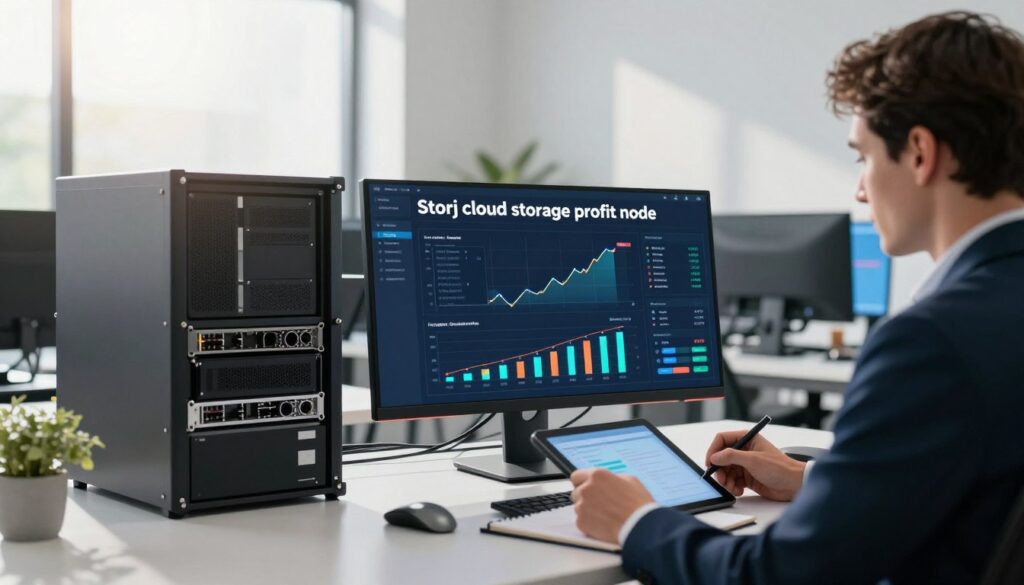
Storj is unique in the cloud storage world. It pays its node operators in US dollars, making money more predictable. If you have unused hard drive space, Storj is a great way to make money. We’ll show you how to get started and start earning.
6.1. Storj and the Tardigrade Network Overview
Storj Labs created the Tardigrade network. It’s a decentralized cloud storage service that’s secure and affordable. Unlike big data centers, it uses many computers to store data.
This approach saves money for businesses and offers a chance for you to earn. The network breaks down, encrypts, and spreads files across nodes. This makes data safe and reliable. It’s a simple way for you to earn in the cloud storage world.
6.2. Setting Up as a Storj Storage Node
Setting up a Storj storage node is easy. You need a good computer and internet. Your machine will store encrypted data for users. Here’s what you need and how to start.
6.2.1. Hardware, Software, and Bandwidth Requirements
You don’t need a top-notch computer. But, it must be reliable and always connected. Storj gives clear guidelines to help your node earn well. Here are the key requirements.
| Component | Minimum Requirement | Recommended for Best Earnings | Key Notes |
|---|---|---|---|
| Storage Drive | 500 GB – 1 TB free space | 2 TB+ SSD or fast HDD | SSDs are favored for speed. Renting out 1TB is a common starting point. |
| CPU & RAM | Dual-core CPU, 2 GB RAM | Quad-core CPU, 4 GB RAM | Modern processors handle encryption efficiently. |
| Bandwidth | 5 Mbps upload, unlimited data | 50+ Mbps upload, unlimited data | Unmetered or high-capacity internet is crucially important. |
| Software & OS | Docker installed | Latest Docker, Linux OS | Storj provides a Docker image. Linux is more stable for 24/7 operation. |
| Uptime | Minimum 5 hours daily | 24/7 with a UPS backup | More uptime directly increases your earning. |
6.2.2. The Audition Process and Going Live
After installing the Storj node software, you don’t earn right away. You go through an audition process. For 5-7 hours, the network tests your node’s reliability and speed.
Your node must pass tests to store real data. If it does, it becomes “live” and starts storing data. If not, you can fix the issue and try again.
6.3. Understanding Storj Payouts in USD
Storj’s payment model is attractive for stable earnings. You earn STORJ tokens for storage and bandwidth. Storj Labs then converts these to US dollars at the current rate.
This conversion happens monthly. You get a USD value, sent to your digital wallet as STORJ tokens. This protects you from cryptocurrency price changes. Your earnings statement shows the USD amount you’ve earned.
Payouts are monthly, around the 25th, for the previous month’s work. You need at least $10 to get paid. A node with 2TB of space on a good connection can earn well.
7. Platform Deep Dive: Earning with Sia
Sia lets you turn your spare hard drive into a steady income stream. It’s perfect if you liked Storj but want more control. Sia’s decentralized network rewards those who dive into its community and tweak their hosting.

7.1. The Sia Network and Skynet Overview
Sia has a unique dual-architecture. At its heart is the Sia blockchain, handling storage contracts and payments openly. On top, Skynet delivers content and hosts websites, using Sia’s storage.
This setup means you’re not just storing data. You’re part of a larger ecosystem for apps and websites. It’s a new way to earn passive income from cloud storage.
7.2. Configuring Your Sia Host for Maximum Profit
Success on Sia isn’t just about having lots of space. It’s about how you present it to renters. Your setup affects your contract wins and earnings.
7.2.1. Setting Storage Prices and Contracts
Sia is different because you set your own prices. You decide on storage and bandwidth costs. It’s like running a small business in an open market.
Renters look for the best deals and form contracts with hosts. You need to balance your prices to be competitive yet profitable. Too high, and you won’t get contracts. Too low, and you might not cover costs. It’s a delicate balance for cloud storage earnings.
7.2.2. The Importance of Netiquette and Reliability
Your reputation is key in Sia’s peer-to-peer world. The community values “netiquette” – being reliable and honoring contracts. Your performance is tracked, and renters prefer stable hosts.
A single outage can harm your reputation and earnings. Make sure your host is stable, with reliable internet and low downtime. This dedication turns a simple setup into a steady passive income from cloud storage stream.
7.3. Getting Paid in Siacoin (SC)
All transactions on Sia are in Siacoin (SC). When a contract ends, you’re paid automatically. Your earnings go into your Sia wallet.
Managing Siacoin requires extra steps compared to USD. You can invest, exchange, or convert it to fiat. This adds volatility but also growth possibilities to your earning money with cloud storage journey.
To cash out, send your SC to a cryptocurrency exchange. There, sell it for Bitcoin or Ethereum, then convert to your local currency. It’s more steps but connects you to the crypto world.
8. Platform Deep Dive: Earning with Filecoin
If you’re serious about your cloud storage business opportunity, Filecoin is for you. It’s a big deal that needs a lot of effort and money upfront. This guide will help you understand how it works and if it’s worth it for you.

8.1. Filecoin’s Proof-of-Storage Model Overview
Filecoin doesn’t just store data; it proves it’s stored right. This is the heart of its Proof-of-Storage and Proof-of-Replication system. It uses special codes to check if data is stored as promised.
There are two main types of checks. Proof-of-Replication shows you’ve stored data on your drive. Proof-of-Spacetime proves you’re keeping it stored over time. These checks are recorded on the blockchain, making them unchangeable.
This system replaces trust with solid proof. Clients pay for sure storage, and providers earn by proving it. It turns simple hard drive space into a commodity with guaranteed integrity worldwide.
8.2. The Path to Becoming a Filecoin Storage Provider
Becoming a Filecoin Storage Provider is like starting a small data center. It’s technical, expensive, and needs constant work. You’ll set up hardware, invest money, and keep up with the network.
8.2.1. Hardware Investment and Initial Commitment
Your hardware is key. You need a strong computer, not just big hard drives. A fast CPU, a quick GPU, lots of RAM, and fast SSDs are essential.
You also need to put up FIL tokens as collateral. This ensures you’re reliable. If you fail, you might lose some of these tokens. The cost can be thousands to tens of thousands of dollars, depending on your plan.
8.2.2. Sealing Sectors and Providing Proofs
The first big task is “sealing” data into sectors. Sealing is hard work that makes data unique to your hardware. A sector is 32GB or 64GB of storage.
After sealing, you keep proving your sectors are good. You submit WindowPoSt proofs often. You also try to submit WinningPoSt proofs to earn more. This needs your node to be always online and have a stable internet.
8.3. Earning and Mining Filecoin (FIL)
You earn from two main sources: storage fees and block rewards. This makes the global cloud storage income opportunity on Filecoin very promising.
When clients store data with you, they pay in FIL. You also earn FIL by adding new storage and proving it. Your share of rewards depends on how much storage you have compared to the network.
Payouts are in FIL tokens, which you can keep, trade, or exchange for cash. Your earnings depend on how well you do, the FIL price, and your storage deals.
| Phase | Key Actions | Estimated Cost/Time Commitment | Technical Demand |
|---|---|---|---|
| Setup & Investment | Acquire specialized hardware, install OS & software, acquire initial FIL stake for collateral. | $5,000 – $20,000+; 1-2 weeks for setup and configuration. | Very High |
| Sealing & Onboarding | Seal initial storage sectors, participate in the network by accepting storage deals. | Time varies by hardware; sealing can take days per sector. | Extreme (High computation) |
| Ongoing Operation | Submit WindowPoSt/WinningPoSt proofs daily, maintain 99.9%+ uptime, manage hardware health. | Continuous monitoring; moderate ongoing electrical cost. | High (Requires automation & monitoring) |
| Earning & Scaling | Earn FIL from deals and rewards, reinvest to seal more sectors and increase market share. | Earnings variable based on FIL price and storage provided. | Medium (Financial and strategic management) |
Filecoin is not for beginners. It’s for those with tech skills, money, and a big dream for Web3 storage. The rewards are high, but it takes a lot of work upfront and ongoing.
9. Side-by-Side Comparison: Choosing Your Platform
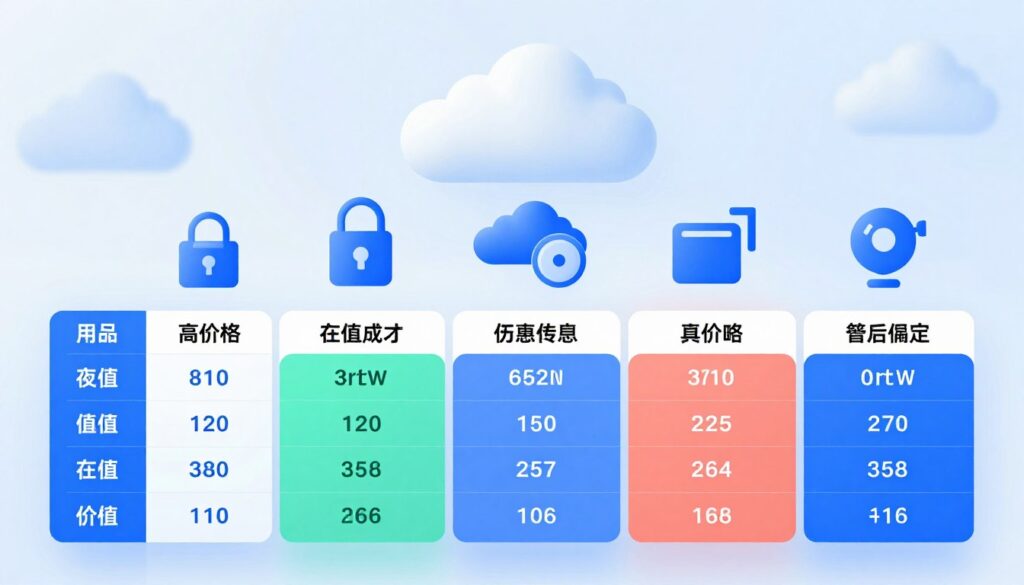
To make an informed choice, let’s break down the key differences between the leading decentralized storage networks. This comparison cuts through the clutter, giving you a clear view of what each platform offers. Your decision impacts your cloud income and overall experience.
Use the table below as your quick-reference guide. Then, we’ll dive into the details to help you match a platform with your skills and goals.
| Decision Factor | Storj (Tardigrade) | Sia (Skynet) | Filecoin |
|---|---|---|---|
| Ease of Start | Very Beginner-Friendly | Intermediate, Hands-On | Advanced, Technical |
| Earnings | Steady, Predictable USD | Variable, Market-Driven SC | Higher, but Volatile FIL |
| Payout Consistency | Monthly, Reliable | Upon Contract Completion | Proving Rewards + Deal Fees |
| Network Demand & Stability | High, Enterprise-Focused | Growing, Developer-Focused | Very High, Broad Ecosystem |
| Hardware Entry Point | Low (Spare Drive OK) | Moderate (Dedicated System) | High (Specialized Setup) |
9.1. Ease of Start: From Beginner to Advanced
Your technical comfort level is the first filter. Storj is designed for simplicity. You can run a node on a spare computer with a straightforward setup wizard. It’s the closest to a “plug-and-play” experience.
Sia requires more configuration. You’ll need to manage settings like pricing and collateral. It’s perfect if you enjoy tinkering and want fine-grained control over your storage host.
Filecoin has the steepest learning curve. Becoming a storage provider involves complex procedures and significant initial setup time. This platform suits those with serious technical skills or a dedicated team.
9.2. Earnings and Payout Consistency
Your global data storage earnings depend on this balance. Storj offers stable payouts in U.S. dollars. The rate per terabyte is consistent, making income forecasting easy.
Sia’s earnings are tied to the Siacoin (SC) market. You set your prices, and income comes as storage contracts are fulfilled. This can lead to higher but less predictable returns.
Filecoin presents the highest reward. Earnings come from block rewards and client storage deals. But, payouts are in FIL, a cryptocurrency known for its price volatility. Your income can swing significantly.
9.3. Network Stability and Current Demand
A healthy, in-demand network means more consistent data storage jobs for you. Storj’s Tardigrade network is stable and boasts strong enterprise adoption. This translates to reliable demand for your storage space.
The Sia network is robust and has a loyal following, mainly among developers using Skynet. Demand is growing steadily but can be more niche compared to larger platforms.
Filecoin’s network is massive and has immense demand from both clients and other Web3 projects. This high demand is a double-edged sword—it means lots of opportunity but also intense competition among providers.
9.4. Our Recommendation Based on Your Profile
Match your situation to the platform that fits best. This is the fastest path to unlocking your cloud income.
- The Absolute Beginner: Choose Storj. You’ll get started quickly, learn the ropes, and earn predictable income with minimal stress.
- The Hands-On Tinkerer: Choose Sia. If you love optimizing systems and don’t mind managing details, Sia offers great control and engagement.
- The Serious Investor with Technical Skills: Choose Filecoin. If you have capital for hardware and the expertise to manage a complex node, the high earning ceiling is worth the effort.
Remember, your choice isn’t permanent. Many successful node operators start with one platform to learn and later expand to others. The key is to take that first, confident step.
10. Your Action Plan: A Step-by-Step Startup Guide
Your journey to making international cloud storage revenue starts with a simple plan. This guide breaks it down into four easy steps. It turns a complex process into a weekend project. Think of it as your guide through each step.

Before we dive into the details, let’s appreciate the simplicity. As one source says, “All you have to do is set up your server, set your rates, and choose your clients.” We’ll follow this simple guide with clear instructions.
10.1. Step 1: Audit Your Available Resources
Success starts with knowing what you have. This step is about taking inventory of your hardware and internet connection. You need to identify your true usable assets.
Look at the hard drives on your computer or a dedicated machine. How much space is truly free? Don’t just check the “free space” on your main drive. Consider external drives or a secondary computer that sits idle most of the day.
10.1.1. Calculating Your Storage and Bandwidth Capacity
For storage, aim to dedicate at least 500 GB to 1 TB to start. This shows commitment to the network and increases your earning. For bandwidth, run a speed test (like speedtest.net) and note your upload speed. This is key.
- Storage: Total Drive Space – (Operating System + Safety Buffer of 10%).
- Bandwidth: Check your internet plan’s monthly data cap. Unlimited is ideal, but know your limit.
- Uptime: Your node needs a stable, always-on internet connection. A residential connection is fine if it’s reliable.
10.2. Step 2: Select and Commit to Your First Platform
Using the comparison from the previous section, choose one platform to start. Commitment is key. Jumping between networks wastes time and configuration effort.
Base your choice on your technical comfort and goals for cloud storage profit. Are you a beginner wanting simplicity (Storj), or are you comfortable with crypto for higher rewards (Sia, Filecoin)? Make your choice and stick with it for the first few months to learn the ropes.
10.3. Step 3: Download, Install, and Configure Software
This is the hands-on phase. Visit your chosen platform’s official website and find the “Storage Provider” or “Host” section. The general steps, as outlined by industry sources, are:
- Sign up for a decentralized cloud storage platform.
- Download the node or host software for your operating system.
- Install the software and run the configuration wizard.
- Connect to the network and point the software to your dedicated storage folder.
Configuration usually involves setting the amount of storage to share, your bandwidth limits, and your payout address. Take your time here; correct setup prevents issues later.
10.4. Step 4: Monitor, Optimize, and Scale
Once your node is live, your role shifts to active management. The first week is about monitoring. Check the software dashboard daily to ensure it’s online and receiving data.
Look for metrics like “storage used” and “earnings accrued.” Optimization might involve adjusting software settings for better performance or ensuring your computer doesn’t go to sleep. After a month of stable earnings, consider scaling. This could mean adding another hard drive to the same node or setting up a second node on another machine.
This cycle of monitoring and incremental growth is how you build a serious stream of cloud storage profit over time.
11. What to Expect: Realistic Earning Potential
Your monthly earnings from cloud storage depend on several factors. Before you start, it’s good to know what affects your income. This way, you can set realistic goals and make the most of your effort.
This way of earning money with cloud storage is real and can grow. But, it’s not a game of chance. Your income will increase as you work harder and use more resources.
11.1. The Key Variables That Determine Your Paycheck
Platforms use a specific formula to calculate your earnings. Your pay isn’t random; it’s based on the quality and amount of service you offer. It’s like a bill, but you get paid for what you provide.
11.1.1. Storage Used, Uptime, and Bandwidth
These three things are the heart of your earnings on any big network.
Storage Used: This is the biggest factor. You only earn on the disk space that’s actually used. Having lots of free space doesn’t help if you’re not renting it out. Networks fill your drive as demand grows.
Uptime: Being reliable is key. Your node must be online and working 24/7. Most platforms require an uptime of over 95%. If your node is down a lot, you might lose money or even get kicked out.
Bandwidth: You earn for data transfer. This includes storing and retrieving data. A node that’s always busy will make more money than one that’s not.
11.1.2. The Impact of Your Geographic Location
Your location is more than just about internet speed. It’s about demand. Networks want to be everywhere to keep data safe and fast.
If you’re in a place with few storage providers, your node might be more in demand. But, if there are lots of nodes around, it might take longer to get started. Your location can affect how fast your storage gets used.
11.2. Monthly Earning Estimates and Real-World Examples
Let’s look at some real numbers. These estimates are based on current rates and give a good idea. But, remember, these are estimates; your actual earnings might be different.
| Platform | Example Storage Utilized | Estimated Monthly Earnings (USD) | Key Notes |
|---|---|---|---|
| Storj | 2 TB | $15 – $25 | Moderate earning. Pays in USD for storage & bandwidth. Easy to start. |
| Sia | 4 TB | $20 – $40 | Earnings in Siacoin (SC). Rates change. Needs more tech setup. |
| Filecoin | 8 TB | $60 – $120+ | High earning. Needs complex setup. Returns grow with storage. |
For example, if you use a 4TB drive for Storj and fill 3TB, you could earn $25 to $40 a month. This is passive income from cloud storage that helps cover your costs.
Filecoin offers bigger rewards but requires more effort. A 32TB setup can earn hundreds of dollars monthly, but it needs a big investment and tech know-how.
This model grows as you add more drives or improve your setup. It’s a straightforward way to earn money with cloud storage.
Start with modest goals, make sure your setup is stable, and then grow. This method turns unused space into a steady income.
12. Pro Tips to Maximize Your Cloud Storage Revenue
Think of your storage node like a digital rental property. Its value depends on location, condition, and reliability. To truly excel in this global cloud storage income opportunity, you need to move beyond the basics. This section is for you when you’re ready to treat your setup like a serious business and squeeze every drop of its value.
12.1. Hardware Optimization for Performance and Longevity
The foundation of your earnings is your hardware. Choosing the right components affects your profit in two big ways: upfront cost and long-term reliability. A key pro tip is to use energy-efficient hardware to minimize costs. This keeps your electricity bill low, which directly boosts your net income.
12.1.1. Choosing Between HDDs, SSDs, and NVMe Drives
Your drive choice is the most critical hardware decision. It’s a balance of cost, speed, and durability. Here’s a breakdown to help you decide:
| Drive Type | Best For | Cost per TB | Speed & Durability |
|---|---|---|---|
| HDD (Hard Disk Drive) | High-capacity, cost-effective bulk storage. Ideal for most nodes. | Lowest | Slower, mechanical parts can wear out. |
| SSD (Solid State Drive) | Faster data access (caching), or networks with high speed demands. | Moderate to High | Very fast, no moving parts, more durable. |
| NVMe Drive | Ultra-fast caching for performance-critical systems. Often overkill. | Highest | Extremely fast, but premium price. |
For most people starting a cloud storage business opportunity, reliable HDDs offer the best value for money. You get more terabytes for your initial investment. Adding a smaller SSD as a cache drive can sometimes speed up operations without breaking the bank.

12.2. Strategies for Running Multiple Nodes Effectively
Once you’ve mastered one node, scaling up is how you significantly increase earnings. More storage space means greater earning capacity. You have two main strategies.
First, you can run multiple nodes on a single, powerful machine. This consolidates your hardware management. You need a motherboard with many SATA ports and a strong CPU.
The second strategy is using several smaller, dedicated machines. This offers better diversification. If one system has an issue, your others keep earning. It also lets you test different platforms or configurations simultaneously.
12.3. Ensuring Maximum Uptime and Reliability
Your income is directly tied to your node’s availability. Networks reward reliable hosts and penalize downtime. Here are non-negotiable tips for rock-solid uptime.
- Uninterruptible Power Supply (UPS): This is your first line of defense. A UPS protects against power surges and provides battery backup during short outages, allowing for a safe shutdown.
- Stable Internet Connection: A wired Ethernet connection is far more reliable than Wi-Fi. Consider an internet plan with a good upload speed, as you’ll be sending data often.
- Remote Monitoring Tools: Use software to check your node’s health from your phone. Set up alerts for high temperature, drive errors, or if the software stops running. Catching problems early prevents lost income.
By focusing on these three pillars—smart hardware, scalable strategies, and bulletproof uptime—you transform your participation. You’re not just sharing space; you’re running a robust, profitable service that maximizes your global cloud storage income opportunity.
13. Understanding and Mitigating the Risks
Turning your spare digital space into income is exciting, but it comes with risks. A responsible approach isn’t about fear; it’s about building a resilient and sustainable operation. By understanding the risks upfront, you protect your hardware, your earnings, and your peace of mind. This knowledge is what separates a fleeting experiment from a reliable stream of global data storage earnings.

Let’s walk through the main categories of risk you might encounter and, more importantly, the practical strategies you can use to manage them effectively.
13.1. Technical Risks: Drive Failure and Data Integrity
Your hard drives are the workhorses of your storage node. They run 24/7, and mechanical failure is not a question of “if” but “when.” A single drive failure can lead to data loss, which on most decentralized networks results in financial penalties or lost revenue.
Mitigation starts with hardware strategy. Using consumer-grade drives in a constant read/write environment is risky. Many successful node operators recommend investing in NAS or enterprise-class drives designed for longevity.
“The mantra for any data storage operation is redundancy, redundancy, redundancy. A single point of failure is your biggest enemy.”
The most powerful tool against drive failure is a RAID (Redundant Array of Independent Disks) configuration. This technology spreads data across multiple drives, so if one fails, your node stays online and no data is lost.
| RAID Level | Minimum Drives | Fault Tolerance | Performance Impact | Best For Node Operators |
|---|---|---|---|---|
| RAID 0 | 2 | None | Fastest | Not recommended. Doubles your risk of failure. |
| RAID 1 | 2 | 1 drive | Good read speed | Excellent for beginners. Simple mirroring for safety. |
| RAID 5 | 3 | 1 drive | Good balance | Great balance of space and safety. Efficient for larger setups. |
| RAID 10 | 4 | Up to 2 drives* | Excellent | Top-tier protection. Combines mirroring and striping for speed and safety. |
Beyond RAID, always maintain regular backups of your node’s critical metadata and configuration files. This data is small but essential. Losing it could mean starting your node from scratch, erasing your earning history.
13.2. Financial Risks: Cryptocurrency Volatility
If your chosen platform pays in its native token like Siacoin (SC) or Filecoin (FIL), your earnings are subject to the crypto market’s famous ups and downs. The dollar value of your cloud income can swing significantly from month to month.
This doesn’t mean you should avoid these platforms. It means you need a plan to manage the volatility.
- Diversify Your Contracts: Don’t put all your storage space on a single platform or into a single long-term contract. Spreading across networks can balance your exposure.
- Regular Conversion: Establish a routine to convert a portion of your earned tokens into a stablecoin or directly to fiat currency (like USD) at regular intervals. This locks in your profits.
- Hedging Mindset: View this income as a bonus or a long-term investment in the technology, not as your primary paycheck. This psychological buffer is critical.
As one source wisely noted, “Volatility Management: Hedge against market risks by diversifying contracts.” This principle is key to stable global data storage earnings.
13.3. Operational and Legal Considerations
Running a storage node is a business activity. You need to be aware of the rules that govern your home infrastructure.
First, check your Internet Service Provider’s (ISP) Terms of Service. Some providers have clauses against running servers or exceeding certain monthly data transfer limits. Exceeding a data cap could lead to throttled speeds or extra fees, hurting your node’s performance and profitability.
Second, and critically, is your tax obligation.
13.3.1. Reporting Your Earnings for Taxes in the US
In the United States, income earned from sharing your cloud storage is generally treated as self-employment income or business income. The IRS requires you to report it.
- Record Keeping: Meticulously track all your earnings, in both token amount and the fair market value in USD on the day you received them. Keep records of all related expenses (hardware, electricity, internet, portion of rent for home office).
- Tax Forms: You will likely report this income on Schedule C (Form 1040), Profit or Loss from Business. The net profit is subject to self-employment tax (Social Security and Medicare) and income tax.
- Consult a Professional: Cryptocurrency taxation is complex and evolving. It is highly recommended to consult with a tax professional who understands crypto income. They can help you navigate deductions and filing correctly.
13.4. Practical Steps to Protect Yourself and Your Investment
Turning knowledge into action is how you build a secure operation. Here is your actionable checklist:
- Use Dedicated Hardware: Run your node on a separate computer or a low-power device like a Raspberry Pi. This isolates it from your personal activities and improves stability.
- Implement a Redundancy Plan: Choose and configure a RAID system that matches your budget and risk tolerance, as outlined in the table above.
- Secure Your Earnings: Withdraw earned cryptocurrency to a private wallet you control, not just an exchange account. Use hardware wallets for significant amounts.
- Monitor Relentlessly: Use the monitoring tools provided by your storage platform. Set up alerts for downtime, low storage space, or high error rates.
- Maintain a Log: Keep a simple document noting changes to your setup, issues encountered, and solutions found. This is invaluable for troubleshooting.
- Start Small, Scale Wisely: Begin with a modest amount of storage on one platform. Learn the ropes, understand your real-world costs and earnings, then scale up deliberately.
By following these steps, you systematically lower your risks. This proactive management is what truly unlocks the long-term cloud income of your digital assets and turns a novel idea into a robust stream of global data storage earnings.
14. The Future of Earning from Cloud Storage
Imagine your cloud storage income growing in both size and complexity. New technologies are making it easier to earn money consistently. This change is here to stay, reshaping how we manage and make money from digital assets.
Your journey is just starting. Knowing what’s coming will help you succeed in the long run and boost your cloud storage profit.
https://www.youtube.com/watch?v=JouGfyHcgsk
14.1. Technological Trends Shaping the Next Decade
Several key innovations will change decentralized storage. These will make it more efficient, secure, and in demand.
First, look for big improvements in data encoding like erasure coding. This tech breaks data into smaller, redundant pieces. Future versions will do this faster and with less power, letting networks store more reliably.
Second, Artificial Intelligence and machine learning are huge drivers. AI needs lots of data to learn. Decentralized networks offer a safe and scalable place for this, creating a new market for your storage.
Lastly, interoperability between storage blockchains is coming. Imagine storing data across different networks like Filecoin, Storj, and Sia based on price and performance. This will make networks more used and stable, helping all providers.
14.2. Predicted Growth in Decentralized Storage Adoption
The market for decentralized storage is expected to grow a lot. As people worry more about data privacy, centralization, and cost in traditional clouds, they’re looking for alternatives.
This shift is driven by several factors:
- Data Sovereignty: Users want control over their data, free from corporate policies.
- Cost Efficiency: Peer-to-peer models are often cheaper, attracting cost-conscious clients.
- Enhanced Security: Distributed storage with end-to-end encryption is more secure against breaches and outages.
This growth means more data will need a home. For you, it means more demand for your space and consistent international cloud storage revenue. The network effects are just starting.
14.3. How to Stay Ahead and Adapt Your Strategy
To thrive, be proactive and flexible. Your strategy should be informed and adaptable.
Commit to Continuous Learning: The tech moves fast. Keep up with blogs and communities of your chosen platforms. New updates or changes can affect your earnings.
Future-Proof Your Hardware: As networks evolve, needs might change. Be ready to upgrade your drives for more capacity or speed. Think about the longevity and warranty of your components as an investment.
Consider Strategic Diversification: Don’t rely on just one network. Running nodes on two networks can protect against issues and expose you to different clients and payment models.
The key to maximizing your cloud storage profit is adaptability. By staying informed and evolving your setup, your income can grow with the industry, securing your share of the future’s international cloud storage revenue.
15. Conclusion
You now see the full picture. The world needs more data storage, giving you a chance to earn money with cloud storage. Your unused hard drive space is a valuable asset. Platforms like Storj, Sia, and Filecoin offer the tech to unlock it.
Learning the steps is easy. First, check how much storage and internet you have. Then, pick a platform that matches your tech skills. After that, install the software and set up your node. This plan turns your knowledge into action.
This chance is about making money from cloud storage in a smart way. It uses something you already have to earn money all the time. It’s part of a future where you control your digital stuff better.
What to do first? Check your storage and internet. Pick a platform from our list and follow its setup guide. Start small, learn as you go, and watch your project grow. The door to the new data economy is open. Step through.